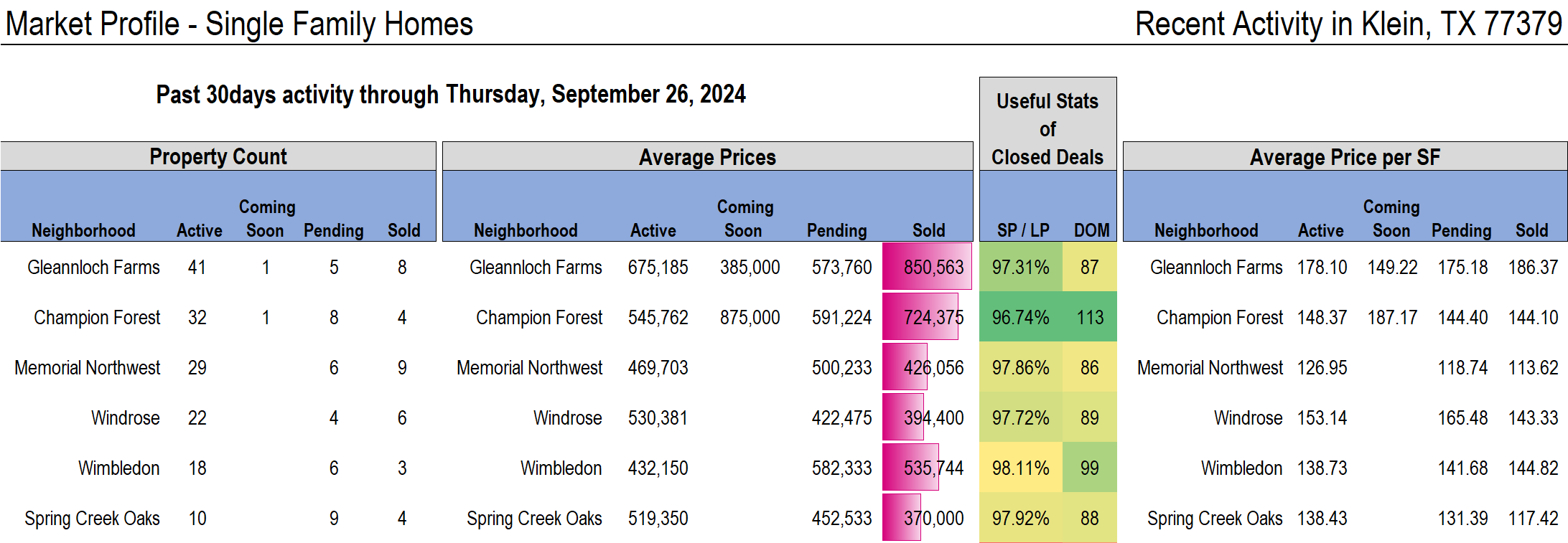
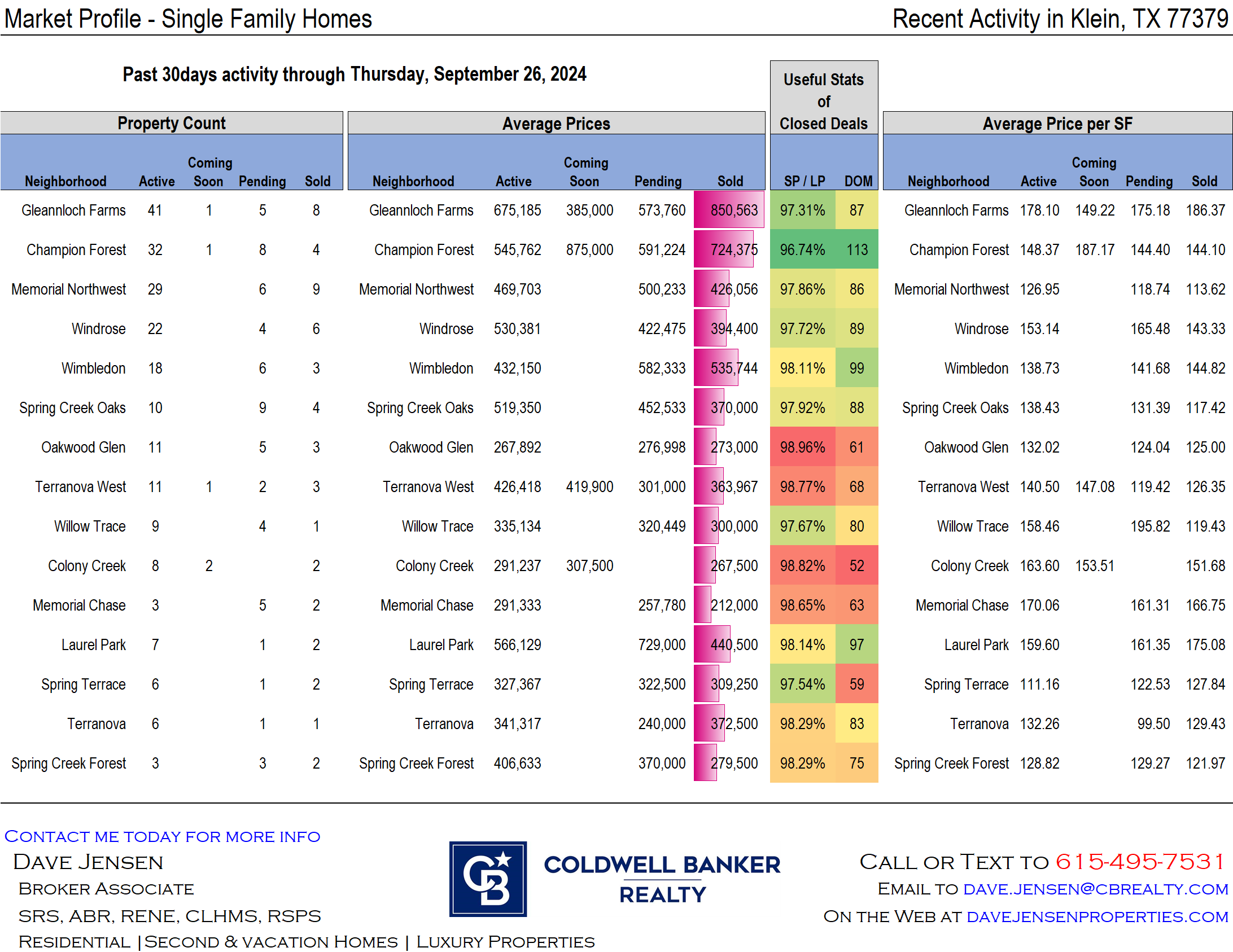
Klein TX (77379) is consistently one of the highest volume zip codes in the Houston marketplace. This market snapshot below is a quick overview of the top 15 most active neighborhoods over the past 30days to September 26, 2024.
Have you had any thoughts of selling? Or extracting cash from your home to invest in an income property? Reach out to me today to get a Property Equity Assessment Report and to talk shop on building a clear strategy plan. Very helpful to know where you stand.
Also click here to check out the mortgage market. Such a clean snapshot of the market.
Patience. Grab the assets and hold for the long term. Buying now may be worth it. To help clarify this article, visit this quick read that discusses the importance of owning assets, and how long you own them…the time spent in the market.
Should you buy a home now or should you wait? That’s a question a lot of people have these days. And while what’s right for you is going to depend on a lot of different factors, here’s something you’ll want to consider as you make your decision.
As soon as you buy, you’ll start gaining equity. And you’d be surprised how quickly that can add up – even with more moderate home price appreciation.
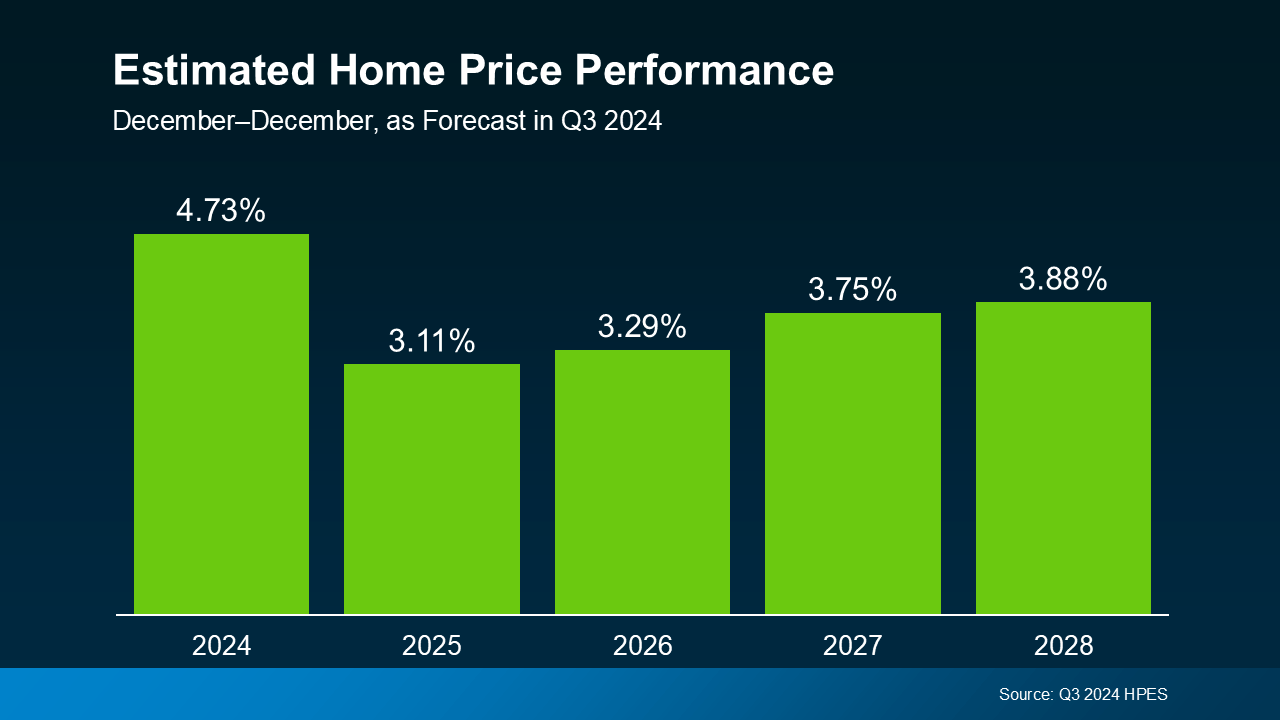
Each quarter, Fannie Mae releases the Home Price Expectations Survey. It asks over one hundred economists, real estate experts, and investment and market strategists what they forecast for home prices over the next five years. In the latest release, experts project prices will continue to rise nationally through at least 2028 (see the graph below):
While home prices are going to vary from one local area to the next, this shows they’re expected to keep going up nationally. The size of the increase varies from year-to-year, but the important takeaway is that prices are forecast to rise every single year – just at a moderate pace.
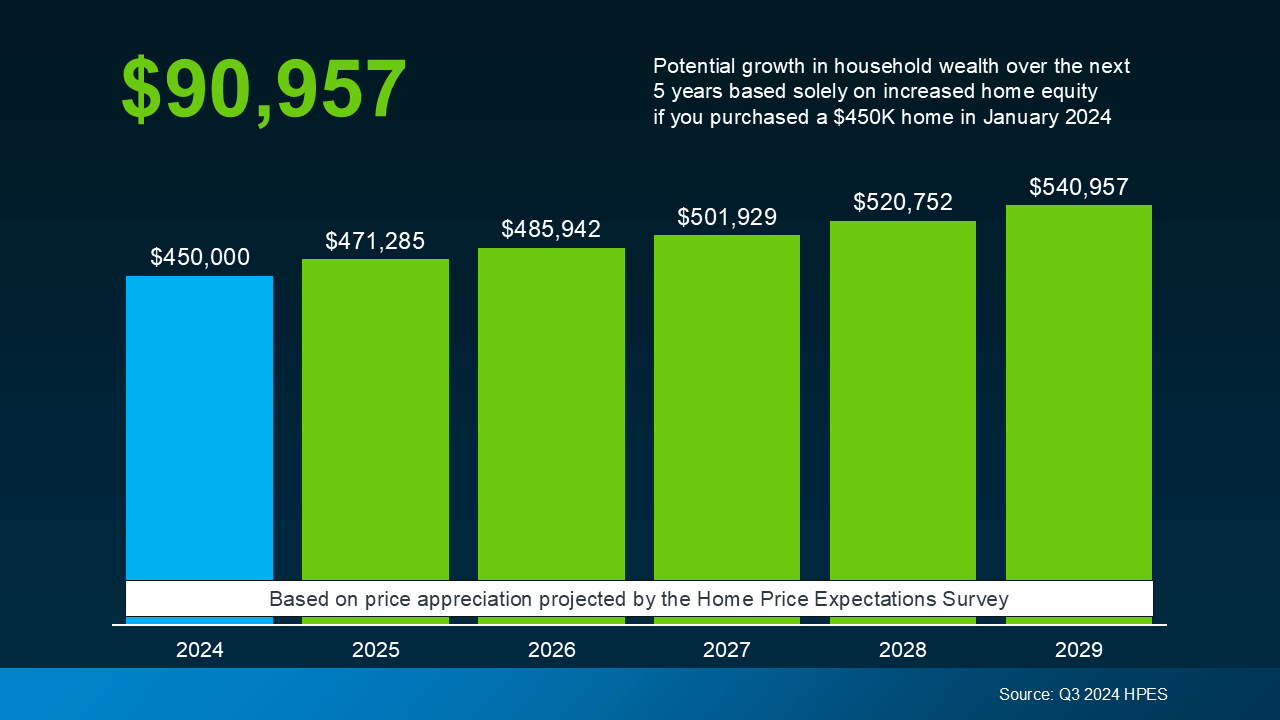
And while rising home prices may not sound great right now, once you own a home, that growth will be a big bonus for you. Here’s a look at what you stand to gain equity-wise once you buy. The graph below uses a typical home’s value and those HPES projections to show how much equity is at stake:
If you bought a $450,000 home at the beginning of this year, based on that starting value and the expert forecasts from the HPES, you could gain more than $90,000 in household wealth over the next five years. That’s significant.
So, if you’re ready and able to buy, and growing your wealth is important to you, you’ve got an opportunity in front of you. And now that mortgage rates have fallen, it may be time to consider making a move.
To talk more about your options and what makes sense, lean on a pro. They’ll be able to tell you what home prices are doing in your area and what that means for your move (and your future equity). TheMortgage Reports says:
“Given the intricacies of the current market, it’s more important than ever to stay informed and up to date about housing market conditions. Whether you’re looking to buy or sell in the remaining months of 2024, having a professional guide you through the process can make all the difference.”
Bottom Line
Buying now may be worth it. The decision to buy now or wait is a very personal one, but it’s valuable to have an expert’s perspective. They won’t push you, but they will explain things you may not have considered, like the equity that’s at stake.
If you want help weighing your options and thinking through the current market, reach out to me today.
Down Payment Assistance programs are out there. You have access to more resources than you may know. This is another reason you should hire a professional to help you buy and sell property. There are things in the industry that insiders know.
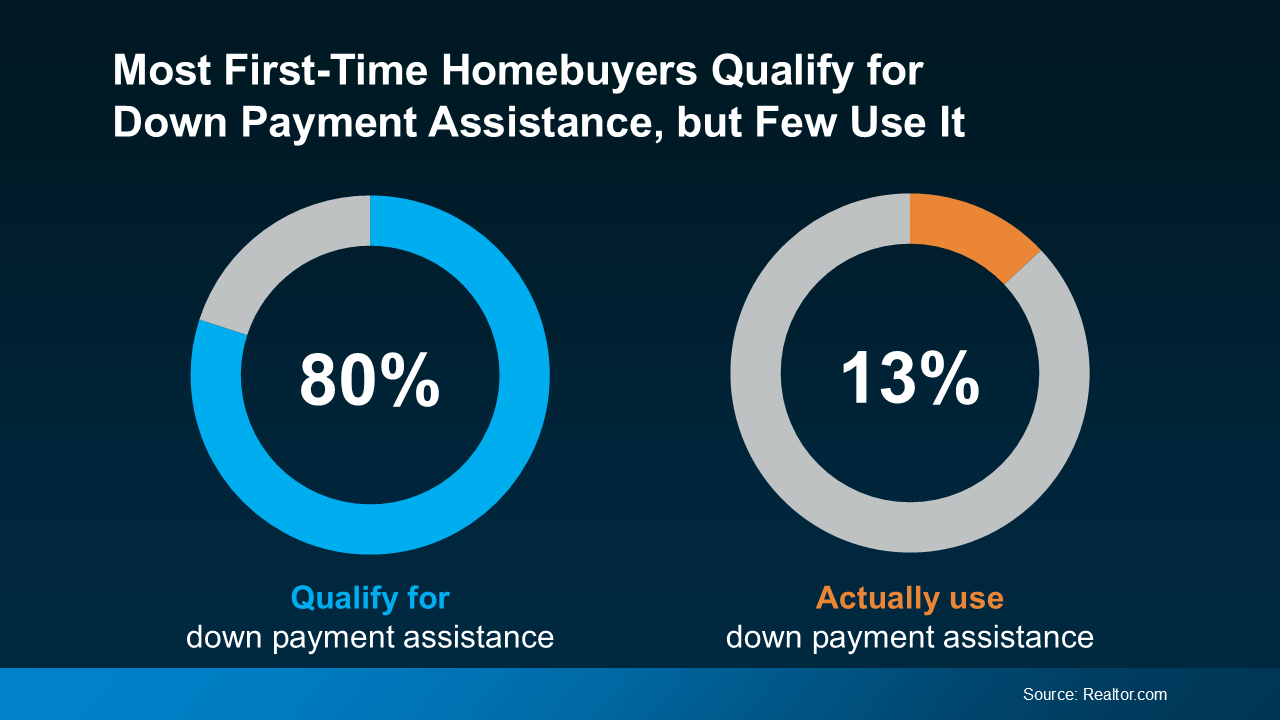
Believe it or not, almost 80% of first-time homebuyers qualify for down payment assistance, but only 13% actually use it. And if you’re hoping to buy a home, this is a mission-critical gap to close – fast (see graph below):
Here’s what you need to know to make the most of your down payment in today’s housing market.
Amplify Your Down Payment Potential
For first-time buyers, the name of the game with down payments is making sure you’re taking advantage of all the resources out there designed to help you. And a bunch of them can get you to your goal faster than you may have thought possible.
For example, there are loan options that require as little as 3% down, or even 0% for certain qualified borrowers, like Veterans. And let’s not forget down payment assistance, like grants and other opportunities, that help you cover the upfront cost of your down payment.
If you’re interested in exploring those options and what you may be able to use to your advantage, connect with a trusted lender. Because if you don’t at least see what’s available, you could be leaving money on the table and missing your chance at buying a home. These resources can boost your down payment. And a higher down payment could help lower your eventual monthly mortgage payment, and even avoid or reduce your fees like private mortgage insurance.
Keep an eye to the long term benefit of owning property. Here’s another quick read article worth your time (maybe a 4minute read). Wealth is built over time, it’s rarely a lottery winning ticket. Be on purpose and just keep your eye on the long term goal.
Don’t Let News Headlines About Down Payments Scare You
There’s one more thing to address. News coverage has been talking about how the typical down payment is rising. A report from Redfin states:
“The typical down payment for U.S. homebuyers hit a record high of $67,500 in June, up 14.8% from $58,788 a year earlier . . . This was the 12th consecutive month the median down payment rose year over year.”
But don’t let those high dollars scare you. Just because the average down payment is rising doesn’t mean down payment requirements are going up. That’s a key piece of the puzzle to understand. It’s really just because people are choosing to put more down to try to offset higher mortgage rates, and current homeowners who are putting their equity to work are using that to increase their down payment on their next home. As HousingWireexplains:
“. . . buyers are putting down a higher percentage of the purchase price to lower their monthly mortgage payment. And buyers also had more equity from their home sales, which gives them more cushion.”
Let’s break those two reasons down a bit:
1. A bigger down payment helps lower your monthly mortgage payment. Affordability has been a challenge for many buyers recently, which is why those who have the ability to make a bigger down payment are going to do so in an effort to lower their future housing costs.
2. Buyers who already own a home have a record amount of equity to leverage. Someone who bought a home a few years ago has gained a significant amount of value in their house, thanks to home price appreciation. These people can put down much more than the average first-time buyer who hasn’t owned a home yet.
Bottom Line
What’s the best thing to do? Talk with a trusted lender about your options. They’ll help you figure out where you stand today and how to access the resources you may qualify for. Because help is out there, you just need to work with a pro to take advantage of it.
Closing Costs vary depending on the title company chosen, the lender, the time of year, specific location, time of the month, the hoa if any. Reach out to me anytime so we can talk shop and be sure you have a plan in place so your eyes are wide open when buying properties.
Now that you’ve decided to buy a home and are ready to make it happen, it’s a good idea to plan ahead for the costs that are a typical part of the homebuying process. And while your down payment is probably the number one expense on your mind, don’t forget about closing costs. Here’s what you need to know.
What Are Closing Costs?
Simply put, your closing costs are the additional fees and payments you have to make at closing. And while they’ll vary based on the price of the home and how it’s being financed, every buyer has these, so they shouldn’t be a surprise. It’s just that some people forget to budget for them. According to Freddie Mac, this part of the homebuying process typically includes:
Application fees
Credit report fees
Loan origination fees
Appraisal fees
Home inspection fees
Title insurance
Homeowners insurance
Survey fees
Attorney fees
Some of these are one-time expenses that are baked into your closing costs. Others, like homeowners’ insurance, are initial installment payments for ongoing responsibilities you’ll have once you take possession of the home.
“Closing costs vary greatly depending on your location and the price of your home. Typically, you should be prepared to pay between 2% and 5% of the home purchase price in closing fees.”
With that in mind, here’s how you can get an idea of what you’ll need to budget. Let’s say you find a home you want to purchase at today’s median price of $422,600. Based on the 2-5% Freddie Mac estimate, your closing fees could be between roughly $8,452 and $21,130.
But keep in mind, if you’re in the market for a home above or below this price range, your numbers will be higher or lower.
Tips To Reduce Your Closing Costs
If you’re wondering if there’s any way to inch that down a little bit, NerdWallet lists a few things that could help:
Negotiate with the Seller: Some sellers are willing to cover part or all of these expenses — especially since homes are staying on the market a bit longer now. Sellers may be more motivated to compromise, and you’ll find you have a bit more negotiation power. So don’t hesitate to ask them for concessions like paying for the home inspection or giving you a credit toward closing costs.
Shop Around for Home Insurance: Since rising home insurance is a challenge in many areas of the country right now, take the time to get a clear picture of all your options. Each insurance company offers their own policies and coverage, so get multiple quotes and see how they compare. Choosing a policy that provides reliable coverage at a competitive rate can make a difference.
Look into Closing Cost Assistance: Just like there are programs out there to help with your down payment, options exist to get support with closing costs too. While they’ll vary by area, there are programs for various income levels, certain professions, and specific towns or neighborhoods too. If you want to learn more, Experian says:
“Your real estate professional should be able to steer you toward applicable programs, and the U.S. Department of Housing and Urban Development (HUD) maintains a helpful resource for finding homebuying assistance programs in every state.”
Planning for the fees and payments you’ll need to cover when you’re closing on your home is important – and it doesn’t have to be a big surprise. With the right experts on your side, you can make sure you’re prepared. Let’s connect so you have someone you can go to for more tips and advice.
Are you thinking of buying a property? Great. Part of the homebuying to do list is to have a strategy talk with your Realtor and get pre-approved for a loan. This gives you the information you need to achieve your goals. Understood you may not want to “ding” your credit. Simply put, get over it and ding your credit. Be serious and find out so you know for sure what kind of financing you can use. Be ready by leveraging the advice of professionals so your time is used productively. This is a must do item on your homebuying to-to list.
Since the supply of homes for sale is growing and mortgage rates are coming down, you may be thinking it’s finally your moment to jump into the market. To make sure you’re ready, you need to get pre-approved for a mortgage. It’s one of the first steps in the homebuying to do list.
That’s when a lender looks at your finances, including things like your W-2, tax returns, credit score, and bank statements, to figure out what they’re willing to loan you. After that process, you’ll get a pre-approval letter to show what you can borrow. Here are two reasons why this is essential in today’s market.
Pre-Approval Helps You Know Your Numbers
While home affordability is finally starting to show signs of improving, it’s still tight. So, it’s a good idea to talk to a lender about your loan options and how today’s changing mortgage rates will impact your monthly payment. The pre-approval process is the perfect time for that. In addition to determining the maximum amount you can borrow, pre-approval also helps you understand this piece of the puzzle. As Investopedia says:
“Consulting with a lender and obtaining a pre-approval letter allows you to discuss loan options and budgeting with the lender; this step can clarify your total house-hunting budget and the monthly mortgage payment you can afford.”
You should use this information to tailor your home search to what you’re actually comfortable with budget-wise. Since mortgage rates have inched down some lately, you may find you’re able to afford a bit more than you’d expect for your monthly payment, but you still want to avoid overextending. As CNET explains:
“In many cases, a lender may preapprove you for more than you need to spend on a home. And while it can be tempting to look at houses outside your budget, it won’t help you in the long run. Before you start touring homes, figure out how much you can realistically afford and stick to your budget.”
Pre-Approval Makes Your Offer More Appealing
And once you do find a home you want in your budget, pre-approval has another big perk. It not only makes your offer stronger, it also shows sellers you’ve already undergone a credit and financial check. When a seller sees you as a serious buyer, they may be more attracted to your offer because it seems more likely to go through. As Greg McBride, Chief Financial Analyst at Bankrate, says:
“Preapproval carries more weight because it means lenders have actually done more than a cursory review of your credit and your finances, but have instead reviewed your pay stubs, tax returns and bank statements. A preapproval means you’ve cleared the hurdles necessary to be approved for a mortgage up to a certain dollar amount.”
As mortgage rates trend down, more buyers are going to be ready to jump back into the market. And while demand is still limited right now, there’s the potential for competition to pick back up, especially in hot markets. So, why not stack the deck in your favor and make sure you’re putting yourself in the best position possible when you find a home you love?
Bottom Line
If you’re planning on buying a home, don’t forget to get pre-approved early in the process. It can help you get a more in-depth understanding of what you can borrow and shows sellers you mean business.
Here’s an article I update from time to time based on market financing rates. A quick read to help you firm up knowledge of your borrowing costs — A review of the cost of credit
Should You Sell Now? If you’ve had any thoughts about selling, it’s a good bet now is the right time. But make sure. Why are you thinking to sell? If you end up in a better financial position, great. But lifestyle usually is the driving force. Family. Retirement. New Job. Maybe just a fresh start. Call your Realtor (or me) today. Get more information so you can KNOW if selling now and moving will produce the result you want. Get the data.
Are you on the fence about whether to sell your house now or hold off? It’s a common dilemma, but here’s a key point to consider: your lifestyle might be the biggest factor in your decision. While financial aspects are important, sometimes the personal motivations for moving are reason enough to make the leap sooner rather than later.
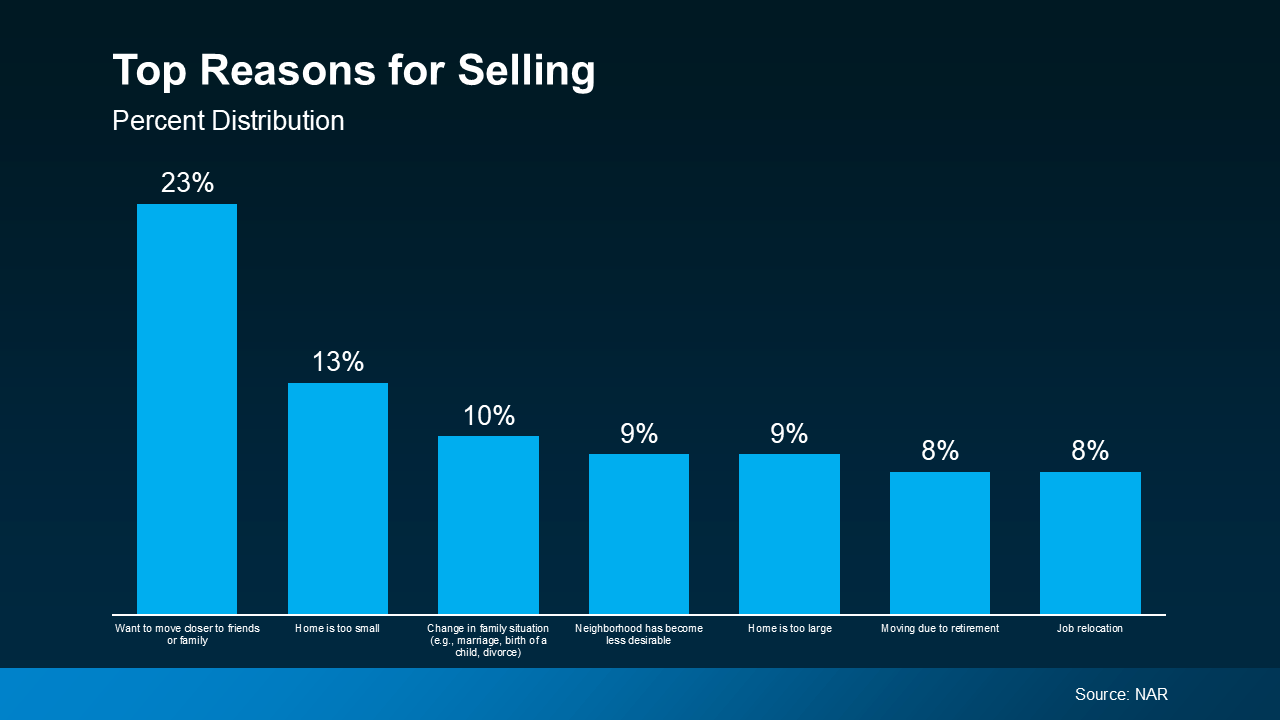
An annual report from the National Association of Realtors (NAR) offers insight into why homeowners like you chose to sell. All of the top reasons are related to life changes. As the graph below highlights:
As the visual shows, the biggest motivators were the desire to be closer to friends or family, outgrowing their current house, or experiencing a significant life change. Getting married or having a baby definitely motivate folks to make the decision to sell. The need to downsize or relocate for work also made the list.
If you, like the homeowners in this report, find yourself needing features, space, or amenities your current home just can’t provide, it’s time to talk to a real estate agent about selling your house. Your needs matter. That agent will walk you through your options and what you can expect from today’s market, so you can make a confident decision based on what matters most to you.
Here’s another relevant article to review if you’ve had any thoughts of selling. It talks about the financial side of selling and how to price your home right.
Your agent will also be able to help you understand how much equity you have and how it can make moving to meet your changing needs that much easier. As Danielle Hale, Chief Economist at Realtor.com, explains:
“A consideration today’s homeowners should review is what their home equity picture looks like. With the typical home listing price up 40% from just five years ago, many home sellers are sitting on a healthy equity cushion. This means they are likely to walk away from a home sale with proceeds that they can use to offset the amount of borrowing needed for their next home purchase.”
Bottom Line
Your lifestyle needs may be enough to motivate you to make a change. If you want help weighing the pros and cons of selling your house, let’s have a conversation.
There are a lot of factors affecting mortgage rates, the housing and property investing market, and the economy as a whole. It’s important to have a good understanding of how job growth, unemployment, inflation, and the federal funds rate influences our daily life and long term plans.
As someone who’s thinking about buying or selling a home, you’re probably paying close attention to mortgage rates – and wondering what’s ahead.
One thing that can affect mortgage rates is the Federal Funds Rate, which influences how much it costs banks to borrow money from each other. While the Federal Reserve (the Fed) doesn’t directly control mortgage rates, they do control the Federal Funds Rate.
The relationship between the two is why people have been watching closely to see when the Fed might lower the Federal Funds Rate. Whenever they do, that’ll put downward pressure on mortgage rates. The Fed meets next week, and three of the most important metrics they’ll look at as they make their decision are:
The Rate of Inflation
How Many Jobs the Economy Is Adding
The Unemployment Rate
Here’s the latest data on all three.
The Rate of Inflation
You’ve probably heard a lot about inflation over the past year or two – and you’ve likely felt it whenever you’ve gone to buy just about anything. That’s because high inflation means prices have been going up quickly.
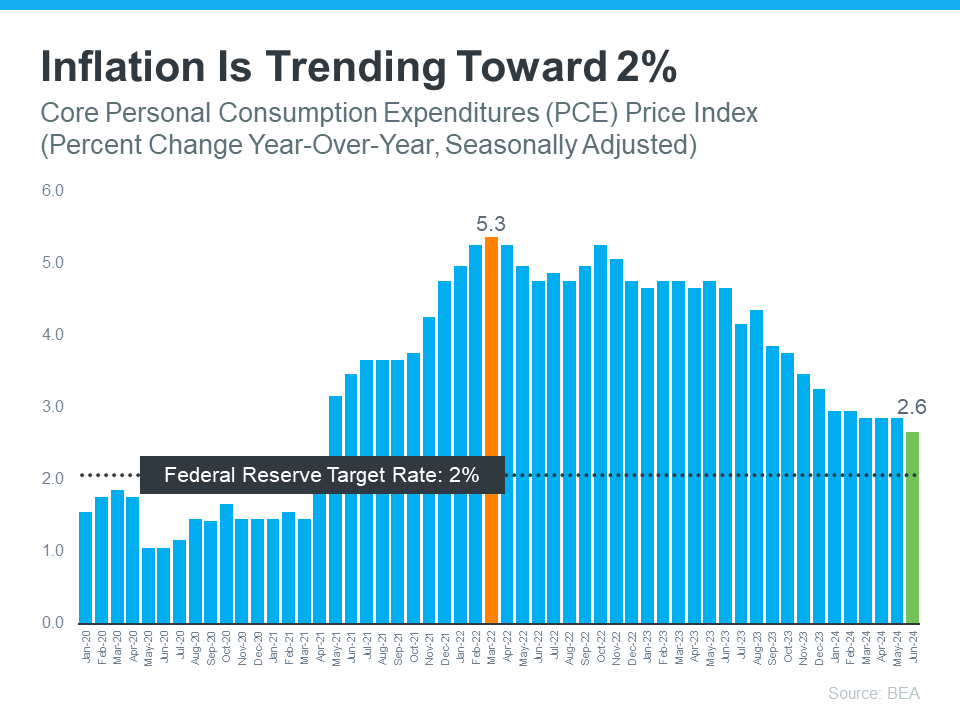
The Fed has stated its goal is to get the rate of inflation back down to 2%. Right now, it’s still higher than that, but moving in the right direction (see graph below):
2. How Many Jobs the Economy Is Adding
The Fed is also watching how many new jobs are created each month. They want to see job growth slow down consistently before taking any action on the Federal Funds Rate. If fewer jobs are created, it means the economy is still strong but cooling a bit – which is their goal. That appears to be exactly what’s happening now. Inmansays:
“. . . the Bureau of Labor Statistics reported that employers added fewer jobs in April and May than previously thought and that hiring by private companies was sluggish in June.”
So, while employers are still adding jobs, they’re not adding as many as before. That’s an indicator the economy is slowing down after being overheated for quite some time. This is an encouraging trend for the Fed to see.
3. The Unemployment Rate
The unemployment rate is the percentage of people who want to work but can’t find jobs. So, a low rate means a lot of Americans are employed. That’s a good thing for many people.
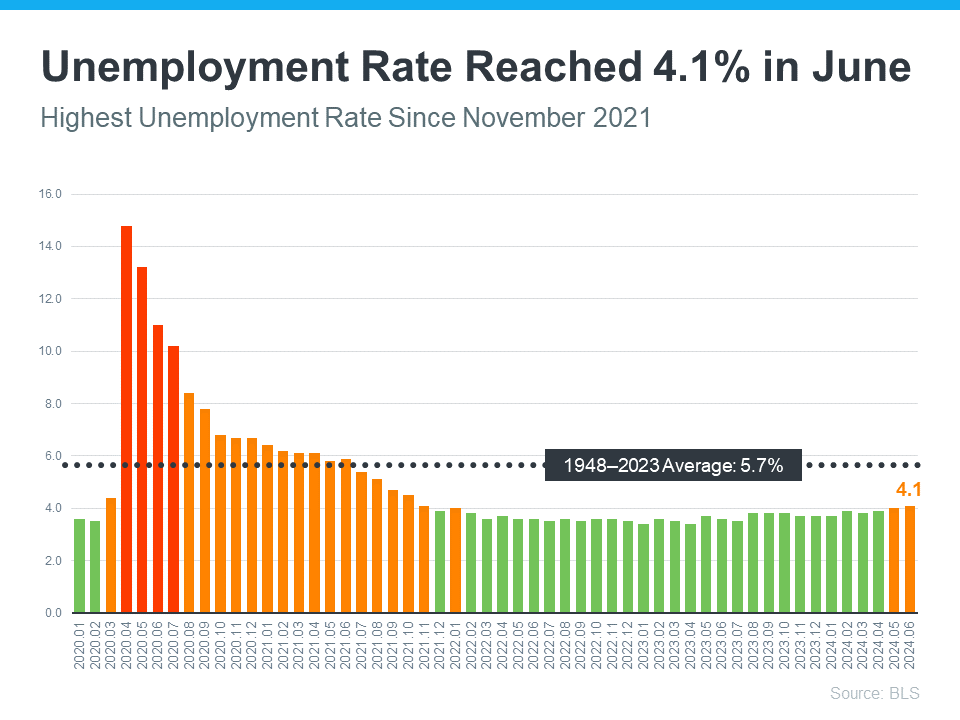
But it can also lead to higher inflation because more people working means more spending – which drives up prices. Right now, the unemployment rate is low, but it’s been rising slowly over the past few months (see graph below):
It may seem harsh, but a consistently rising unemployment rate is something the Fed needs to see before deciding to cut the Federal Funds Rate. That’s because a higher unemployment rate would mean reduced spending, and that would help get inflation back under control.
What Does This Mean Moving Forward?
While mortgage rates are going to continue to be volatile in the days and months ahead, these are signs the economy is headed in the direction the Fed wants to see. But even with that, it’s unlikely they’ll cut the Federal Funds Rate when they meet next week. Jerome Powell, Chair of the Federal Reserve, recently said:
“We want to be more confident that inflation is moving sustainably down toward 2% before we start the process of reducing or loosening policy.”
Basically, we’re seeing the first signs now, but they need more data and more time to feel confident that this is a consistent trend. Assuming that direction continues, according to the CME FedWatch Tool, experts say there’s a projected 96.1% chance the Fed will lower the Federal Funds Rate at their September meeting.
Remember, the Fed doesn’t directly set mortgage rates. It’s just that whenever they decide to cut the Federal Funds Rate, mortgage rates should respond.
Of course, the timing of when the Fed takes action could change because of new economic reports, world events, and other factors. That’s why it’s usually not a good idea to try to time the market.
For other info related to buying a home in this economy, here’s a great article on how to know ifyou’re ready to buy a home
Bottom Line
Recent economic data may signal that hope is on the horizon for mortgage rates. Let’s connect so you have an expert to keep you up to date on the latest trends and what they mean for you.
The mortgage rate you lock in today is not permanent. It’s a way to get started. Decide the rate you want based on your budget and work from there. Like all valuable things, you manage that expense over time. When rates drop, you refinance.
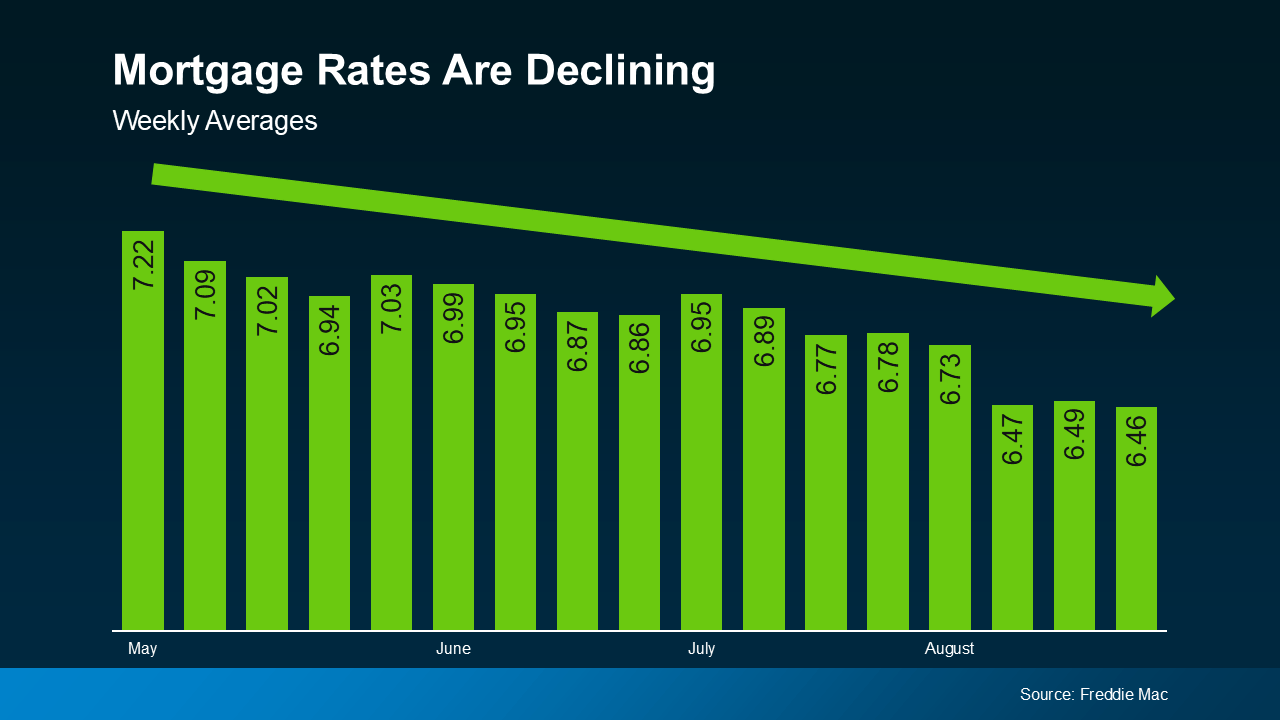
You won’t find anyone who’s going to argue that mortgage rates have had a big impact on housing affordability over the past couple of years. But there is hope on the horizon. Rates have actually started to come down. And, recently they hit the lowest point we’ve seen in 2024, according to Freddie Mac (see graph below):
And if you’re thinking about buying a home, that may leave you wondering: how much lower are they going to go? Here’s some information that can help you know what to expect.
Expert Projections for Mortgage Rates
Experts say the overall downward trend should continue as long as inflation and the economy keeps cooling. But as new reports come out on those key indicators, there’s going to be some volatility here and there.
What you need to remember is it’s not wise to let those blips distract you from the larger trend. Rates are still down roughly a full percentage point from the recent peak compared to May.
And the general consensus is that rates in the low 6s are possible in the months ahead, it just depends on what happens with the economy and what the Federal Reserve decides to do moving forward.
Most experts are already starting to revise their 2024 mortgage rate forecasts to be more optimistic that lower rates are ahead. For example, Realtor.comsays:
“Mortgage rates have been revised slightly lower as signals from the economy suggest that it will be appropriate for the Fed to begin to cut its Federal Funds rate in 2024. Our yearly mortgage rate average forecast is down to 6.7%, and we revised our year-end forecast to 6.3% from 6.5%.”
Know Your Number for Mortgage Rates
So, what does this mean for you and your plans to move? If you’ve been holding out and waiting for rates to come down, know that it’s already happening. You just have to decide, based on the expert projections and your own budget, when you’ll be willing to jump back in. As Sam Khater, Chief Economist at Freddie Mac,says:
“The decline in mortgage rates does increase prospective homebuyers’ purchasing power and should begin to pique their interest in making a move.”
As a next step, ask yourself this:what number do I want to see rates hit before I’m ready to move?
Maybe it’s 6.25%. Maybe it’s 6.0%. Or maybe it’s once they hit 5.99%. The exact percentage where you feel comfortable kicking off your search again is personal. Once you have that number in mind, you don’t need to follow rates yourself and wait for it to become a reality.
Instead, connect with a local real estate professional. They’ll help you stay up to date on what’s happening and have a conversation about when to make your move. And once rates hit your target, they’ll be the first to let you know.
If you’ve put your moving plans on hold because of higher mortgage rates, think about the number you want to see rates hit that would make you re-enter the market.
Once you have that number in mind, let’s connect so you have someone on your side to let you know when we get there.
Owning a home (or several properties) is one of the few consistently reliable means to build generational wealth. Over the long term, the facts are supported by data: your home is a powerful investment
Going into 2023, there was a lot of talk about a possible recession that would cause the housing market to crash. Some in the media were even forecasting home prices would drop by as much as 10-20%—and that might have made you feel a bit unsure about buying a home.
But here’s what actually happened: home prices went up more than usual. Brian D. Luke, Head of Commodities at S&P Dow Jones Indices, explains:
“Looking back at the year, 2023 appears to have exceeded average annual home price gains over the past 35 years.”
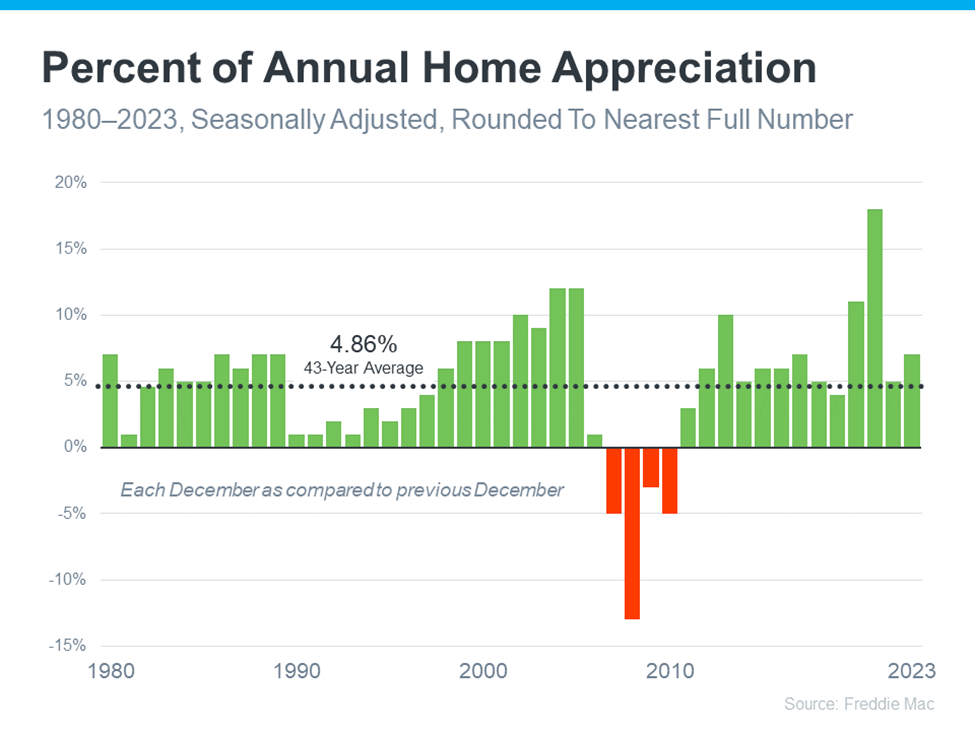
To put last year’s growth into context, the graph below uses data from Freddie Mac on how home prices have changed each year going back to 1980. The dotted line shows the long-term average for appreciation:
“. . . the U.S. real estate market has a long and reliable history of increasing in value over time.”
In fact, since 1980, the only time home prices dropped was during the housing market crash (shown in red in the graph above). Fortunately, the market today isn’t like it was in 2008. For starters, there aren’t enough available homes to meet buyer demand right now. On top of that, homeowners have a tremendous amount of equity, so they’re on much stronger footing than they were back then. That means there won’t be a wave of foreclosures that causes prices to fall.
The fact that home values went up every single year except those four in red is why owning a home can be one of the smartest moves you can make. When you’re a homeowner, you own something that typically becomes more valuable over time. And as your home’s value appreciates, your net worth grows.
So, if you’re financially stable and prepared for the costs and expenses of homeownership, buying a home might make a lot of sense for you.
And in the meantime, think of some other reasons why your home is a powerful investment.
Bottom Line
Home prices almost always go up over time. Here’s an article that speaks to the value of staying put to turn your home into your personal bank – Time in the Home – Not Timing the Market.
Let’s connect to talk about what you’d like to achieve in the next 4 years or so in terms of property ownership. A vacation rental? A second home somewhere…maybe in your home town? Maybe the goal is to replace your income from your job by owning several rentals or an apartment building?
It takes planning and deliberate effort. And it’s within your reach!
Price your home to sell, not to sit! An overpriced home wastes your time. MAYBE you’ll get that one buyer to pay too much for your home. Maybe. More likely, you lose the power of “new on the market”, see very little foot traffic, and no offers, then you lower your listing price below where it should be because it’s stigmatized. Keep your eye on the larger picture of what you’re trying to do and get the deal closed and move on to that next chapter of your life. Price it right.
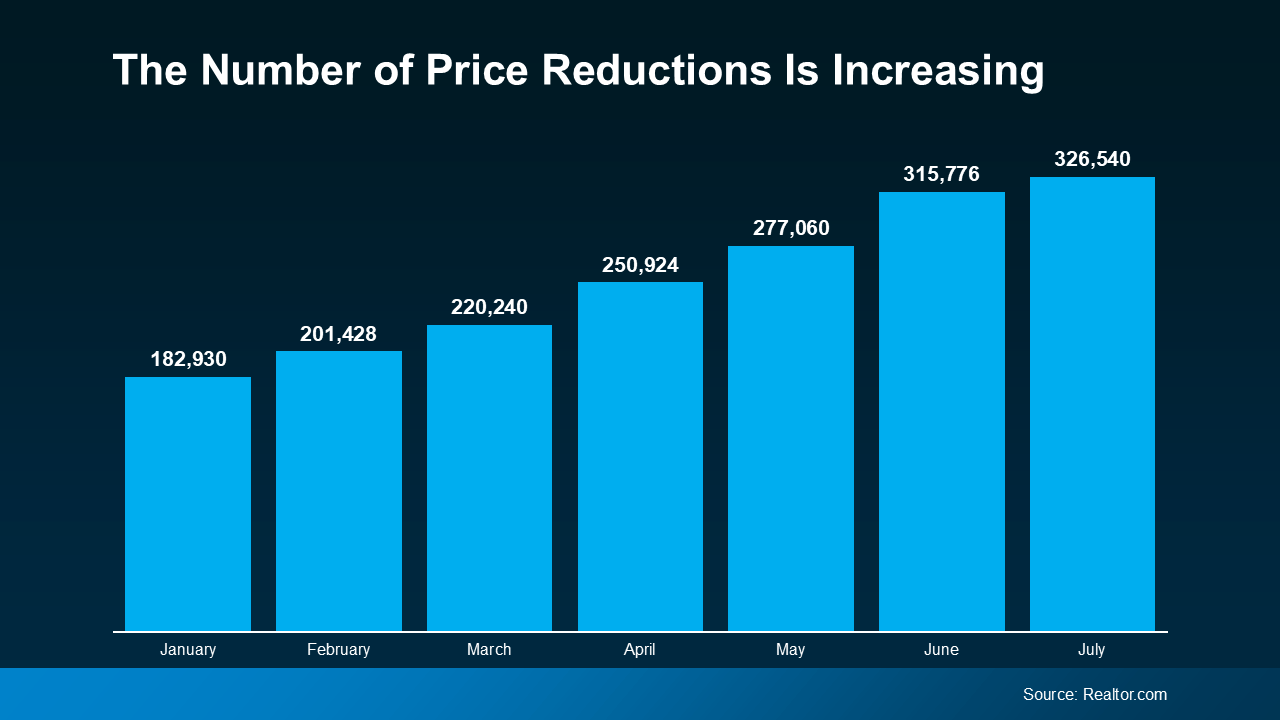
In today’s housing market, many sellers are making a critical mistake: overpricing their houses. This common error can lead to a home sitting on the market for a long time without any offers. And when that happens, the homeowner may have to drop their asking price to try to re-ignite buyer interest.
Data from Realtor.com shows the number of homeowners realizing this mistake and doing a price reduction is climbing (see graph below):
If you’re thinking about making a move yourself, here’s what you need to know. The best way to avoid making a costly mistake is to work with a trusted real estate agent to find the right price. Here’s a look at what’s at stake if you don’t.
Not Paying Attention To Current Market Conditions
Understanding current market conditions is key to accurate pricing. You don’t want to set your asking price based on what happened during the pandemic. The market has moderated a lot since then, so it’s far better to align your price with today’s reality.
Real estate agents stay updated on market trends and how they impact the pricing strategy for your house.
Pricing It Based on What You Want To Make (Not What It’s Worth)
Another misstep is pricing it based on what you want to make on the sale, and not necessarily current market value. You may see other homes in your neighborhood selling for top dollar and assume yours can do the same. But you may not be considering differences in size, condition, and features. For example, maybe that other house is waterfront or has a finished basement. To sum it up, Bankrate explains:
“How do you find that sweet spot of pricing for profit but not overpricing? The expertise of your agent can be truly valuable here. A knowledgeable agent will understand fair market value in your area, how much your house is worth and how much you might reasonably expect to get for it in the current market.”
An agent will do a comparative market analysis (CMA) to make sure your house is compared with truly similar properties to get an accurate look at how it should be priced.
Pricing High to Leave Room for Negotiation
Another common, yet misguided strategy is to price your house high on purpose, so you have more room to negotiate down during the sale. But this can backfire. A price that seems too high often deters potential buyers from even considering the home. So rather than leaving room for negotiation, what you’ll actually be doing is turning buyers away. U.S. News Real Estate explains:
“You want to sell your house for top dollar, but be realistic about the value of the property and how buyers will see it. If you’ve overpriced your home, chances are you’ll eventually need to lower the number, but the peak period of activity that a new listing experiences is already gone.”
An agent can help you set a fair price that attracts buyers and encourages more competitive offers.
Overpricing your home can have serious consequences. A knowledgeable real estate agent brings an objective perspective, in-depth market knowledge, and a strategic approach to pricing.
Let’s connect so you can avoid making a pricing mistake that’ll cost you.

 Facebook
 X
X
 Pinterest
 Copy Link