
Why Timing Matters More Than Price When Selling a Home in Houston
Dave Jensen April 6, 2026
Dave Jensen April 6, 2026
Timing Before Price
Most homeowners believe pricing determines whether a home sells.
That belief holds… until it doesn’t.
Because what actually determines the outcome is usually something less visible:
when the home enters the market.
—
A homeowner in The Woodlands reached a point most people recognize.
The house still worked. Nothing was broken.
But life had shifted just enough that staying no longer felt like the right long-term decision.
They did what most people do.
They looked at recent sales.
They evaluated condition.
They aligned on a price that felt reasonable — even competitive.
From the outside, everything looked correct.
—
But the market they were entering wasn’t static.
It had already moved.
The most active buyer pool for that segment — families relocating before the next school cycle — had largely made decisions three weeks earlier.
What remained wasn’t no demand.
It was fragmented demand.
Slower. More selective. Less decisive.
—
Just imagine entering the market at exactly the right price…
…and still missing the group of buyers most capable of acting.
Same home.
Same presentation.
Same number.
Different outcome.
—
This is the part most people never see.
Because timing doesn’t show up in the same way price does.
You can’t point to it on a spreadsheet.
You don’t get direct feedback that says, “you entered two weeks late.”
Instead, you experience it indirectly:
And eventually, a quiet shift in perception.
—
So the homeowner does what feels logical.
They adjust price.
Because price is the only visible lever.
—
But price is not what caused the slowdown.
Timing did.
—
Suppose two identical homes in Memorial enter the market.
One launches:
The other launches:
The second home doesn’t fail because it was overpriced.
It fails because it entered after the decision window.
—
This is where sequence matters.
And where most listings quietly lose their advantage.
Because by the time a homeowner is thinking about price…
the timing decision has already been made.
—
In higher price points, this becomes even more pronounced.
At $2M+ in areas like Benders Landing or Tanglewood:
There are moments when multiple qualified buyers are evaluating the same type of property.
And there are moments when those same buyers are no longer active.
Those moments don’t last long.
—
Just imagine preparing a home for months…
only to enter the market just after that window passes.
—
The market doesn’t explain this.
It simply responds.
And the response often gets misinterpreted as a pricing issue.
—
I wrote a deeper breakdown of how these timing windows actually behave — not as theory, but as sequence — for people who are starting to think about this before they need to act.
Because by the time most sellers recognize timing…
they’re already reacting to it.
—
Price is a number.
Timing is a strategy.
And the difference between the two is usually decided before your home is ever seen.
—
If you’re in Northwest Houston — Cypress, Tomball, Magnolia, or The Woodlands — and starting to think about a move in the next 6–18 months, this is the part of the process that determines whether everything that follows feels smooth… or reactive.
—
Most homeowners don’t realize they had a timing problem until they try to fix it with price.
And by then, the outcome is already forming.
Stay up to date on the latest real estate trends.
A grounded way to make your next move calm, clear, and financially sound.
Why “What’s My Home Worth?” Is the Second Question, Not the First
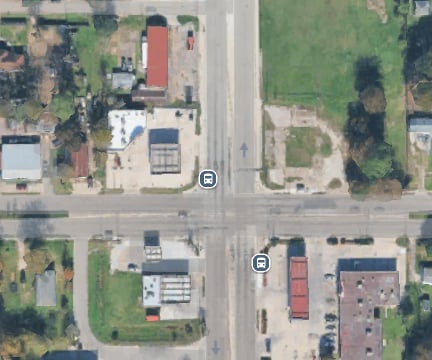
The geometry of land value along Houston’s emerging Northeast corridors.
Most sellers focus on pricing. The real advantage comes from understanding when the right buyers are actually active.

Why the strongest offer isn’t always the one that protects your next move
Leveraging experience and data to produce a solution that's a fit for you, your current and long-term goals. And it starts with our first conversation. Call today!

1335 Lake Woodlands Dr C The Woodlands TX 77380